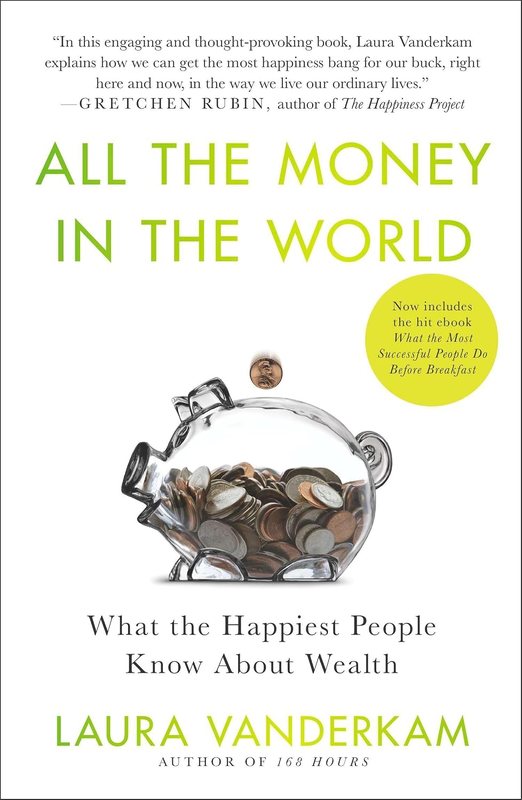
All the Money in the World
What genuinely happy people do differently with their money.
by Laura Vanderkam · 2012
Share on XLikely Laura Vanderkam's book on the relationship between money and happiness — her research-driven, unsentimental style applied to a question most personal-finance writing avoids: not how to get more money, but what money actually does and doesn't buy in terms of genuine satisfaction, and where people consistently misjudge that relationship.
The useful version of this argument isn’t “money doesn’t matter” (it clearly does, up to a point) — it’s more specific than that: which purchases and money decisions reliably move happiness, and which ones people assume will and don’t.
The more specific and more useful version of the money-happiness question, per Vanderkam's approach, is comparing categories of spending directly — experiences versus possessions, time-saving purchases versus status purchases — rather than asking the vague question of whether money buys happiness at all, since the research is much clearer on some categories (yes, paying someone to do a chore you hate) than others (no, a bigger house rarely delivers what people expect from it).
Key ideas
- Money clearly matters up to a point, but most personal-finance writing avoids the harder question of what it actually does and doesn't buy in satisfaction.
- The question isn't whether money buys happiness — it's which specific purchases actually do, and most people are buying the wrong ones.
- Paying someone to do a chore you hate reliably moves happiness; a bigger house rarely delivers what people expect from it.
- Comparing categories of spending directly — experiences versus possessions, time-saving versus status — is more useful than asking the vague question.