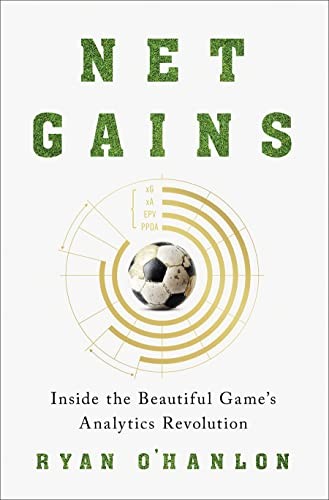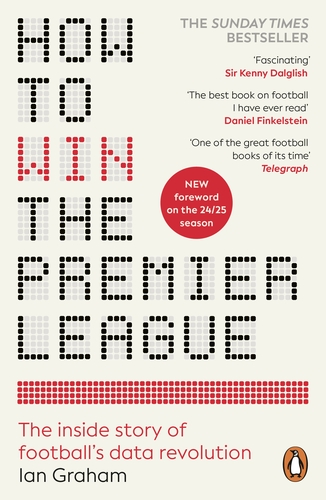
Expected Goals
The origin story of xG and how it changed the way football is watched.
by Rory Smith · 2022
Share on XSmith is the New York Times' chief soccer correspondent, and this is the definitive narrative history of how xG — and data more broadly — went from a stats-Twitter argument to a number broadcast live during matches.
The best material here is the near-misses: an analyst advising Arsenal to sign a young Kevin De Bruyne, who they passed on before he went on to star at Chelsea and Manchester City; Liverpool's data-driven pursuit of Roberto Firmino under Klopp; the specific data-forward clubs — Brighton, Brentford, Bayern Munich, RB Leipzig — that bet early on analytics and won.
It's journalism, not a technical manual — there's no math to work through, just a genuinely well-reported account of an industry changing its mind, told through the people who had to argue for it inside skeptical institutions.
The De Bruyne anecdote does more work than any statistical explainer could — a data analyst's warning, ignored, followed years later by the exact outcome the model predicted, is the kind of story that made skeptical scouts and coaches start taking the numbers seriously in a way abstract arguments about expected value never could. Smith's reporting keeps finding that pattern: analytics winning arguments not through persuasion but through being right often enough that ignoring it got expensive.
Key ideas
- This is the definitive narrative history of how xG went from a stats-Twitter argument to a number broadcast live during matches.
- Data won its place in football not by winning the argument, but by being right when the humans in the room were wrong.
- The near-misses are the best material — an analyst's ignored warning about a young Kevin De Bruyne is the story that made skeptics start listening.
- It's journalism, not a technical manual — a well-reported account of an industry changing its mind, told through the people who had to argue for it.