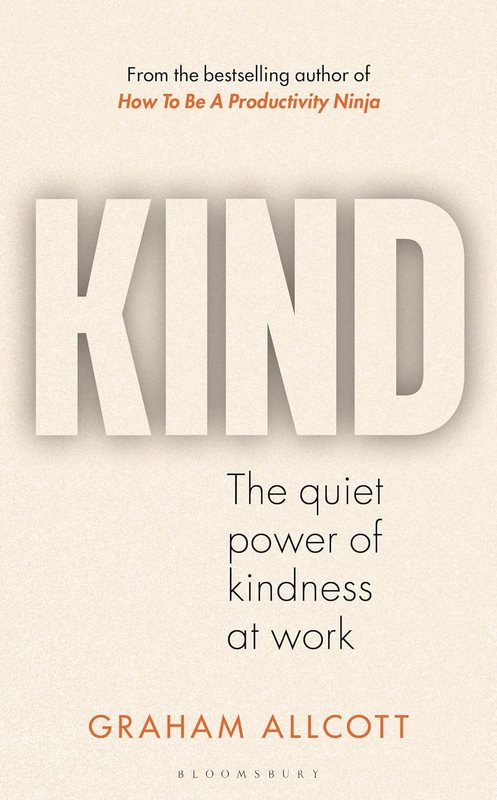
KIND
Graham Allcott's case for kindness as a management discipline, not a personality trait
by Graham Allcott · 2024
Share on XGraham Allcott is the bestselling author of How to Be a Productivity Ninja and the founder of Think Productive, one of the world's leading productivity training companies.
In KIND, Allcott makes the case that kindness at work isn't a soft, nice-to-have trait but a genuine driver of performance, trust, and retention. Drawing on research from psychology and organizational behavior alongside his own experience building and leading teams, he argues that kind leadership — clear, honest, generous with feedback and grace — consistently outperforms the command-and-control style many managers default to under pressure. The book works through what kindness actually looks like in practice: how to give difficult feedback kindly, how to set boundaries without being harsh, and how to build a culture where people do their best work because they feel genuinely supported.
A practical, well-argued case for treating kindness as a management discipline rather than a personality trait.
Allcott is careful to separate kindness from conflict-avoidance — the book's most useful chapters are specifically about delivering hard feedback kindly rather than softening it into vagueness, which he argues is where most well-intentioned managers actually go wrong. The distinction between being nice (avoiding discomfort) and being kind (telling the truth with care) does a lot of work throughout the book.
Key ideas
- Kindness at work is a genuine driver of performance, trust, and retention, not just a soft, nice-to-have trait.
- Kind management means telling people the truth, not protecting them from it.
- Kindness is distinct from conflict-avoidance — the useful chapters are about delivering hard feedback kindly rather than softening it into vagueness.
- Kind leadership consistently outperforms the command-and-control style many managers default to under pressure.