Noise
The overlooked, unwanted variation quietly distorting human judgment.
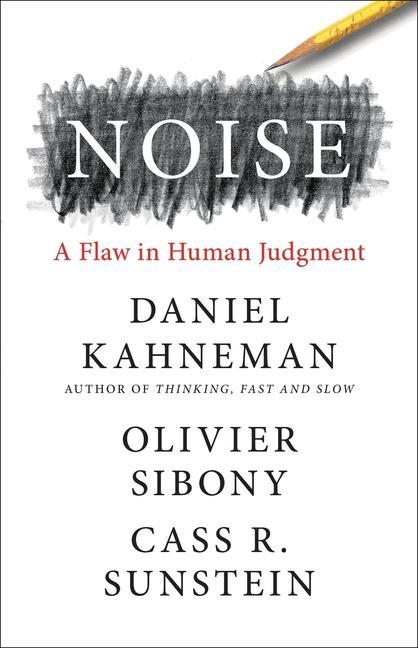
by Daniel Kahneman, Olivier Sibony, Cass R. Sunstein · 2021
Share on XDaniel Kahneman's earlier work explored bias — the systematic ways judgment tilts in a predictable direction. Noise, co-written with Olivier Sibony and Cass Sunstein, is about bias's quieter, less-discussed sibling: unwanted variability in judgment, where the same case gets a different verdict depending on which judge, doctor, or underwriter happens to look at it, on no principled basis at all.
The core experiment that anchors the book is genuinely unsettling: ask the same professionals to evaluate the same case twice, weeks apart, without telling them it’s a repeat. They often disagree with themselves. That’s noise — not a directional error you can correct for, just inconsistency, and the book argues it costs organizations far more than most people assume, precisely because it’s invisible in a way bias isn’t.
It’s a denser read than Kahneman’s earlier book — more organizational-audit than pop psychology — but the practical tools (structured “noise audits,” decision hygiene checklists) are genuinely usable at work, not just interesting to read about.
The book's most damning finding might be how invisible noise stays even to the people producing it — underwriters and judges are confident their judgment is consistent, and are routinely wrong about that, which is exactly why organizations rarely audit for it on their own. Kahneman, Sibony, and Sunstein's case for structured decision processes over individual judgment calls follows directly from this: if you can't trust people to notice their own inconsistency, you have to build systems that catch it for them.
Key ideas
- Noise is bias's quieter sibling: unwanted variability in judgment, where the same case gets a different verdict depending on who happens to look at it.
- An organization can't fix a problem its own people can't see themselves making — noise stays invisible even to the people producing it.
- The same professionals evaluating the same case twice, weeks apart, often disagree with themselves — a genuinely unsettling finding.
- Structured "noise audits" and decision hygiene checklists are genuinely usable at work, not just interesting to read about.