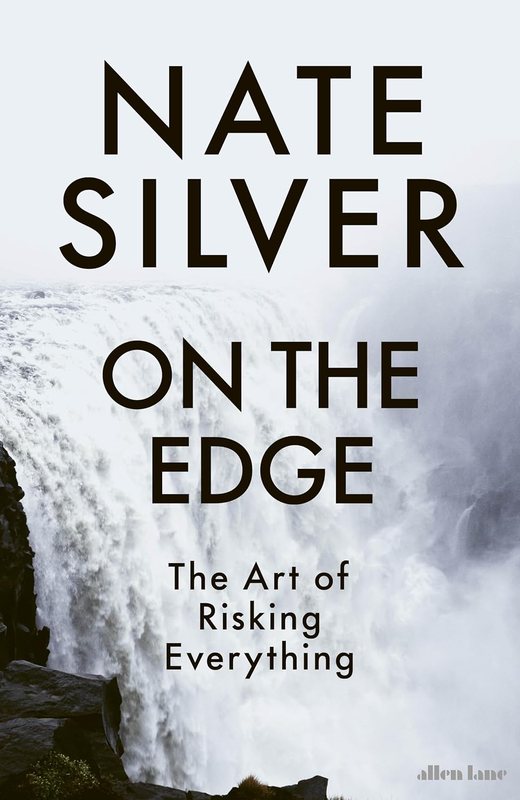
On the Edge
What separates calculated risk-taking from recklessness.
by Nate Silver · 2024
Share on XSilver's framework splits the world into “The River” — poker players, VCs, quants, professional gamblers who think probabilistically for a living — and “The Village,” the more risk-averse academic and media establishment, and uses that lens to examine everything from Las Vegas to effective altruism.
The book's strongest material is its reporting on Sam Bankman-Fried and FTX, and its sharp, widely-discussed critique of effective altruism's utilitarian extremes (including philosopher William MacAskill's infamous thought experiment about flipping a coin to double the number of Earths) — Silver ultimately lands on a more modest, classical-liberal pluralism, drawing on economist Deirdre McCloskey.
It's heavily anchored to 2021–2024 events — crypto, FTX, effective altruism's public reckoning — which makes parts of it feel more like a snapshot of a specific moment than a timeless framework, a point several reviewers have made directly.
The River/Village framework is doing more analytical work than it first appears — Silver uses it less to praise risk-takers uncritically and more to explain why the two groups talk past each other on everything from AI safety to gambling regulation, since each side is implicitly applying a different standard for what counts as an acceptable bet. The FTX reporting works precisely because it shows a River person who stopped applying River-style risk discipline to his own firm.
Key ideas
- Silver splits the world into "The River" (poker players, VCs, quants who think probabilistically for a living) and "The Village" (the more risk-averse establishment).
- The interesting question isn't whether someone takes risks, but whether they're still doing the math when it matters most.
- The FTX reporting works because it shows a River person who stopped applying River-style risk discipline to his own firm.
- The book is heavily anchored to 2021–2024 events, which makes parts of it feel like a snapshot of a specific moment rather than a timeless framework.