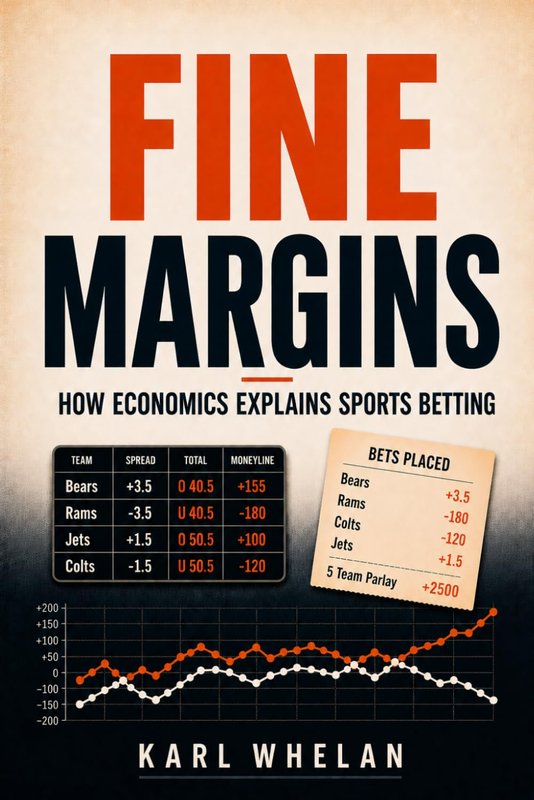
Whelan is a Professor of Economics at University College Dublin, and this is the first book to apply economic analysis seriously to modern sports betting. It is built on original research covering millions of quoted odds across several sports and seasons, some of it developed with a professional bookmaker.
The framework is simple and useful: every price combines two things, the bookmaker's view of the probability and the margin added on top. A bettor can only improve by finding where the probability is wrong and by avoiding the bets where the margin is heaviest.
The data is where the book earns its place. Margins vary widely by bet type, odds get worse once play starts, specials such as NFL player touchdown bets lose heavily, and late in-play longshots return poorly on average. Patterns like these are usually argued about; here they are measured.
Key ideas
- Every price is a probability plus a margin, and the two should be judged separately.
- The margin is not fixed: it changes a great deal depending on the market and the type of bet.
- In-play odds are worse than pre-match odds, so timing is part of the cost.
- Specials and late longshots are where bettors lose most, on average.