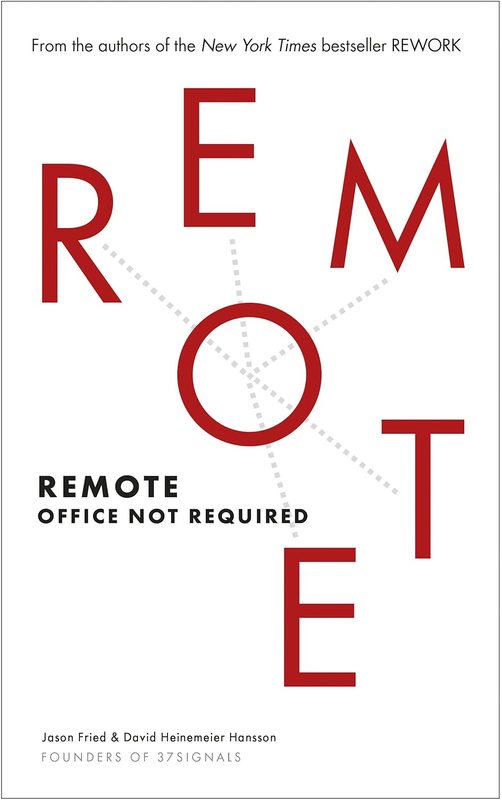
Remote
The case for remote work, years before it became the norm.
by Jason Fried, DHH · 2013
Share on XJason Fried and David Heinemeier Hansson (Basecamp’s founders) made the case for remote work years before it was forced on the rest of the working world — opinionated, occasionally combative, and largely vindicated once 2020 made the argument for them whether companies wanted it or not.
What holds up isn’t just the “remote works” thesis itself — it’s the specific operational advice about how to actually make it work: overlapping hours versus full asynchrony, how to preserve culture without a physical office, why constant real-time meetings are often a symptom of bad process rather than good collaboration. That’s more useful now, with remote and hybrid work normalized, than it was when the book first argued for something still considered fringe.
The book's most durable argument is that remote work exposes bad process rather than causing it — a company that ran on constant real-time meetings and hallway check-ins was often just compensating for unclear ownership and documentation, and removing the physical office forces those gaps to become visible instead of quietly absorbed by proximity.
Key ideas
- Fried and Hansson made the case for remote work years before it was forced on the rest of the working world by 2020.
- Remote work doesn't break a company's process — it just stops letting a shared office paper over a broken one.
- Constant real-time meetings are often a symptom of bad process rather than good collaboration.
- The specific operational advice — overlapping hours versus full asynchrony, preserving culture without a physical office — is more useful now than when it was first written.