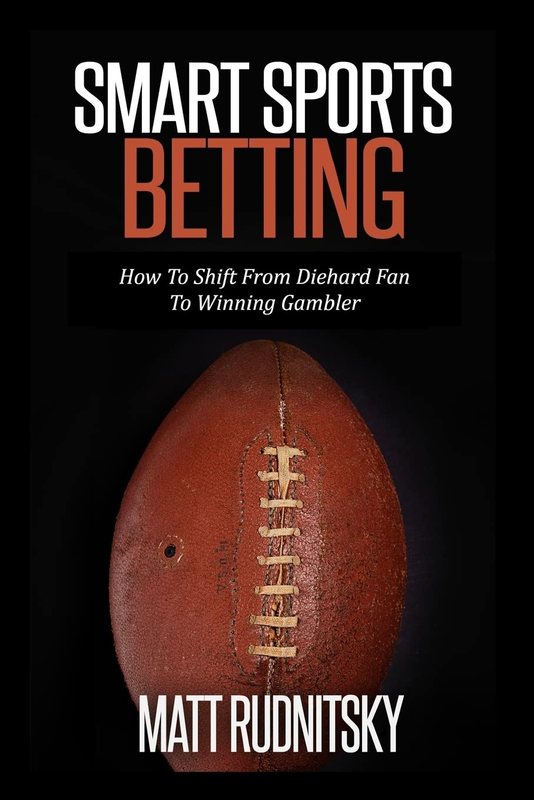
Smart Sports Betting
Practical stats and the psychology needed to bet with discipline.
by Matt Rudnitsky · 2014
Share on XRudnitsky opens with his own cautionary story — turning a $100 gift into roughly $8,000 before losing all of it — and the book is his attempt to distill what he learned studying successful bettors afterward.
It's deliberately accessible rather than technical: bankroll management, understanding “fair odds” and value, avoiding the specific cognitive biases that wreck casual bettors, and a pointed critique of how sports media covers betting picks — endorsed by ESPN betting writer David Purdum, and reportedly a category bestseller on Amazon.
This is explicitly a beginner's book, not a sophisticated modeling guide — readers looking for more technical rigor should look elsewhere on this shelf instead.
Rudnitsky's own losing streak does real work as a structural device — he's specific about the exact cognitive traps that took him from up $8,000 to broke (chasing losses, upping stakes to recover faster, mistaking a hot streak for skill), which makes the caution more credible coming from someone narrating his own mistakes than from a hypothetical cautionary tale.
Key ideas
- Rudnitsky opens with his own cautionary story — turning a $100 gift into roughly $8,000 before losing it all.
- The fastest way to lose a winning streak is to start betting like the money you're up isn't really yours to lose.
- It's deliberately accessible: bankroll management, understanding "fair odds" and value, avoiding the cognitive biases that wreck casual bettors.
- This is explicitly a beginner's book, not a sophisticated modeling guide — readers wanting technical rigor should look elsewhere on this shelf.