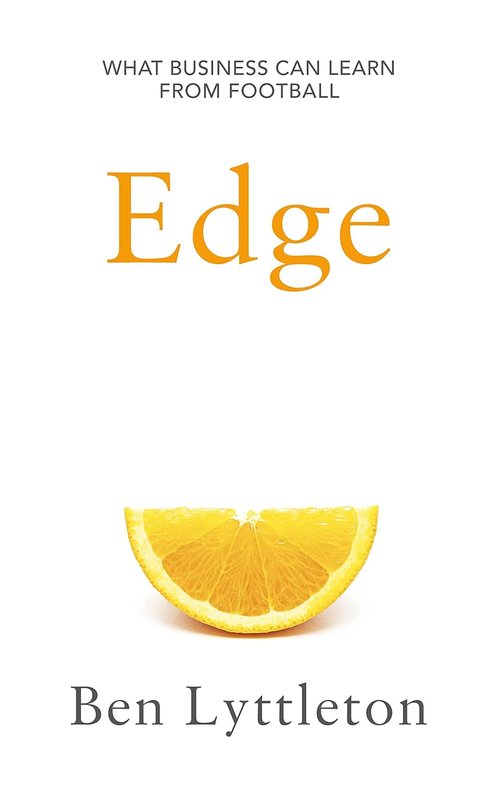
Edge
Football's lessons on pressure, teams, and performance, applied to work.
by Ben Lyttleton · 2017
Share on XBen Lyttleton's Edge looks at how elite football clubs and organizations apply psychological research — decision-making under pressure, team culture, penalty-taking — to gain competitive advantage, treating the sport as a case study for broader lessons about high-performance environments.
The penalty-kick research is the material most readers remember — Lyttleton draws on studies of what actually predicts penalty success (routine and commitment to a pre-chosen strategy, not raw talent) that have since influenced how top clubs prepare for shootouts.
Because Lyttleton frames football as a lens on business and organizational psychology more broadly, the book is aimed as much at readers interested in performance culture generally as at football fans specifically.
Lyttleton's penalty research is specific enough to be genuinely useful rather than just interesting — players who commit to a pre-chosen placement and stick with it regardless of the goalkeeper's movement convert at meaningfully higher rates than players who wait and react, which is a finding with real echoes in any high-pressure decision made under time constraint, not just penalty kicks.
Key ideas
- Elite football clubs apply psychological research — decision-making under pressure, team culture, penalty-taking — to gain competitive advantage.
- Committing to a pre-chosen plan under pressure consistently beats improvising in the moment, even when improvising feels safer.
- Players who commit to a pre-chosen penalty placement and stick with it convert at meaningfully higher rates than players who wait and react.
- The book frames football as a lens on business and organizational psychology more broadly, aimed at readers beyond football fans.