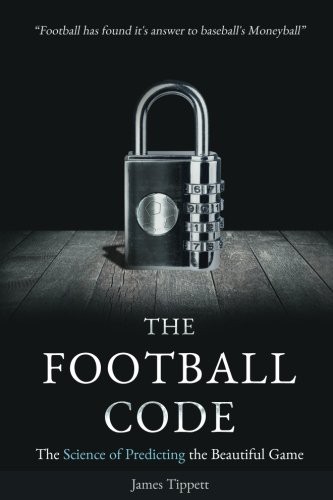
The Football Code
Inside the mathematical models used to actually predict match results.
by James Tippett · 2017
Share on XTippett worked at Smartodds, the analytics consultancy tied to Brentford owner Matthew Benham, and this book is structured around that firm's actual process for turning data into decisions: collect, analyze, judge, decide.
Rather than treating scouting intuition and statistics as rivals, Tippett makes the case they're complementary — the data narrows the search, but human judgment still closes it — and uses Benham's own career, from statistical trader to football club owner, as the through-line example of that combination working in practice.
It's more grounded in real industry practice than a lot of books that just explain what xG is; Tippett was inside a firm actually using this stuff to make betting and recruitment decisions, which shows in how practically it's written.
The collect-analyze-judge-decide framework is the book's real skeleton, and Tippett is specific about where each stage can fail independently — clean data collection doesn't guarantee good analysis, sound analysis doesn't guarantee the judgment to interpret it correctly, and correct judgment still requires the institutional will to act on it. Most books in this genre only really examine the first two stages.
Key ideas
- Tippett worked at Smartodds, the analytics consultancy tied to Brentford owner Matthew Benham, and structures the book around that firm's process: collect, analyze, judge, decide.
- A data department can get the analysis right and still lose if the judgment or the decision-making that follows it breaks down.
- Scouting intuition and statistics are complementary, not rivals — data narrows the search, but human judgment still closes it.
- It's more grounded in real industry practice than books that just explain what xG is, since Tippett was inside a firm actually using this to make decisions.