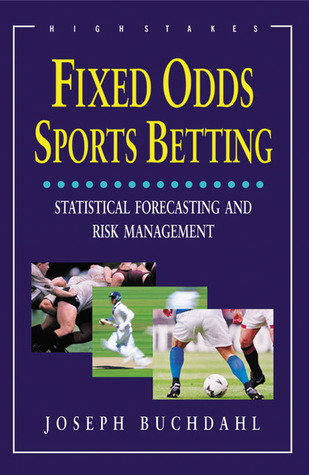
Fixed Odds Sports Betting
A statistical, risk-management approach to pricing fixed-odds markets.
by Joseph Buchdahl · 2004
Share on XThis is Buchdahl's earliest and most foundational book — the one where he first laid out the core idea running through his whole body of work: disciplined betting can function as a genuine form of low-risk investment, not just high-risk gambling.
It covers statistical forecasting methodology, staking and bankroll planning, and value-odds analysis, all built around the explicit goal of teaching bettors to protect profits through sensible risk management rather than chasing big single wins.
Published in 2003, reviewers note some of the statistical/modeling sections feel dated by pre-modern-analytics standards — but the core staking and risk-management discipline it teaches has aged much better than the specific technical sections.
Buchdahl's framing of disciplined betting as a form of low-risk investment rather than gambling is the idea his entire later career built on, and reading it here in its earliest, most foundational form is useful precisely because it's less polished than his later books — you can see the core argument (protect capital first, chase edge second) before it got refined, which makes the reasoning behind it more visible.
Key ideas
- This is Buchdahl's earliest and most foundational book — disciplined betting as a form of low-risk investment, not just high-risk gambling.
- Protecting your capital matters more than chasing any single edge — a principle simple enough to state in one sentence and hard enough that most bettors ignore it anyway.
- It covers statistical forecasting methodology, staking and bankroll planning, and value-odds analysis, all built around protecting profits through risk management.
- Published in 2003, some statistical sections feel dated by modern-analytics standards, but the core staking discipline has aged much better.