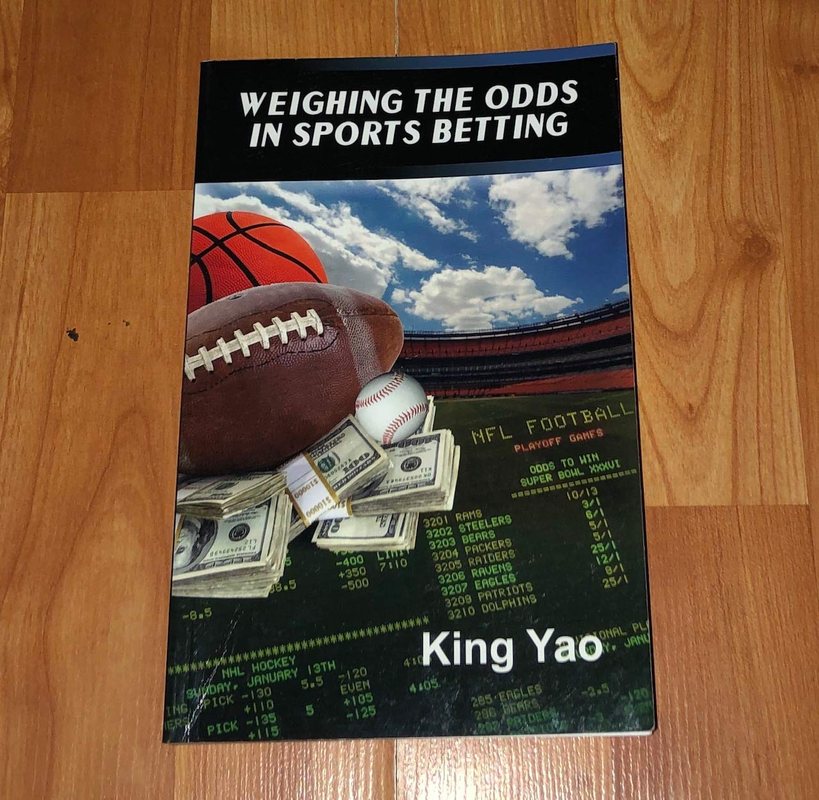
Weighing the Odds in Sports Betting
A statistics-first approach to pricing your own betting lines.
by King Yao · 2007
Share on XYao treats sportsbooks the way a trader treats a market — the whole book is built around expected value as the one concept that actually matters, with everything else in service of estimating it accurately.
He frames sharp bettors explicitly as “traders” exploiting pricing inefficiencies, recommends conservative bankroll rules (1–2% of bankroll per wager), and specifically warns against progressive betting systems like the Martingale that feel intuitively appealing but are mathematically dangerous.
Published in 2007, some of the specific market-structure advice — how much line-shopping value is actually available, how books behave — is dated relative to today's more efficient, algorithmically-priced betting markets, though the underlying EV discipline hasn't gone anywhere.
Yao's trader framing does real conceptual work — treating a sportsbook's line the way a market maker treats a bid-ask spread reframes 'finding value' from a gut-feel judgment about a team into a specific, checkable comparison between your own probability estimate and the implied probability baked into the odds, which is the same discipline that separates a professional trader from someone guessing.
Key ideas
- Yao treats sportsbooks the way a trader treats a market — expected value is the one concept that actually matters, with everything else in service of estimating it.
- Finding value in a betting line is the same skill as spotting a mispriced asset — it's a comparison, not a hunch.
- Sharp bettors are framed explicitly as "traders" exploiting pricing inefficiencies, with conservative bankroll rules of 1–2% per wager.
- Published in 2007, some market-structure advice is dated relative to today's more efficient, algorithmically-priced markets, though the EV discipline hasn't gone anywhere.