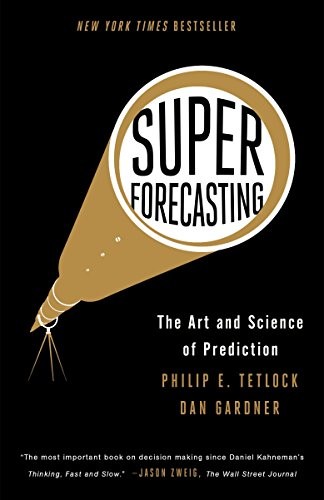
Superforecasting
What actually makes some people's predictions reliably better than others'.
by Philip Tetlock, Dan Gardner · 2015
Share on XDrawing on Tetlock's Good Judgment Project, this book identifies what separates people who are actually good at predicting future events from the much larger group who merely sound confident — traits like updating beliefs incrementally, thinking in probabilities rather than certainties, and actively seeking disconfirming evidence.
It's grounded in real tournament data rather than intuition about what good forecasting should look like, with case studies of individual "superforecasters" keeping the abstract material concrete.
The central findings are compelling, but the book occasionally repeats its core points across chapters in slightly different framings, and readers hoping for a step-by-step system will find more philosophy than checklist.
The book's most counterintuitive finding is that domain expertise correlates surprisingly weakly with forecasting accuracy — some of Tetlock's best performers were serious hobbyists rather than credentialed specialists, and what predicted accuracy instead was a specific cognitive style: breaking a big question into smaller measurable pieces, updating in small increments rather than dramatic swings, and treating a forecast as a probability to keep revising rather than a fixed prediction to defend.
Key ideas
- What separates people who are actually good at predicting future events from those who merely sound confident: updating beliefs incrementally, thinking in probabilities, seeking disconfirming evidence.
- Being a good forecaster has less to do with what you know than with how willing you are to keep updating what you think.
- Domain expertise correlates surprisingly weakly with forecasting accuracy — some of the best performers were serious hobbyists, not credentialed specialists.
- It's grounded in real tournament data from the Good Judgment Project rather than intuition about what good forecasting should look like.