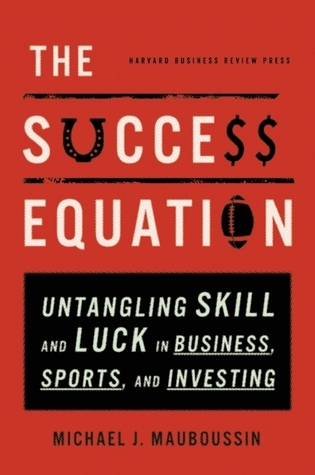
The Success Equation
Untangling how much of any result is skill versus luck.
by Michael J. Mauboussin · 2013
Share on XMichael Mauboussin's core project in The Success Equation is separating skill from luck in outcomes that look identical from the outside — a winning trade, a championship season, a great quarter. His method: if you can't lose on purpose, it's mostly skill (chess); if a novice occasionally beats a pro, luck plays a real role (much of investing, some of sports).
The tool he keeps coming back to is the skill-luck continuum, with a simple diagnostic: track your process, not just your outcomes, because in luck-heavy domains a good decision can still lose and a bad one can still win — reversion to the mean is doing more work than most people credit.
Mauboussin draws examples from baseball, casinos, and fund management with equal comfort, which is the book's strength and occasionally its weakness — it moves fast enough that some domains get only a chapter's worth of nuance.
Mauboussin's process-over-outcome diagnostic has a sharp practical edge for anyone evaluating their own decisions after the fact — in a luck-heavy domain, judging a decision purely by whether it worked out rewards recklessness that happened to pay off and punishes careful reasoning that happened to lose, which is exactly the evaluation trap that keeps people making the same mistakes as long as early results look good.
Key ideas
- Mauboussin separates skill from luck in outcomes that look identical from the outside — a winning trade, a championship season, a great quarter.
- In a luck-heavy game, judging a decision by its outcome instead of its process will eventually teach you the wrong lesson.
- If you can't lose on purpose, it's mostly skill (chess); if a novice occasionally beats a pro, luck plays a real role (much of investing).
- Track your process, not just your outcomes — in luck-heavy domains a good decision can still lose and a bad one can still win.