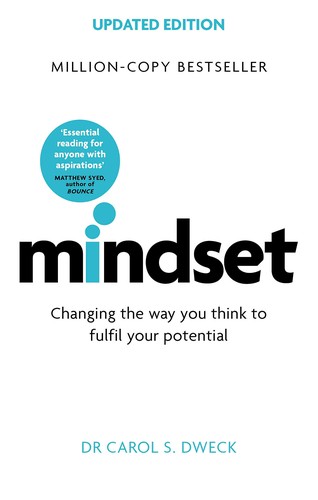
Dweck's core claim is that people operate from one of two implicit theories about ability: a "fixed mindset" that treats talent as an innate ceiling, or a "growth mindset" that treats it as something built through effort — and that this single belief shapes how people respond to failure, challenge, and criticism across school, sports, relationships, and work.
The book is built on decades of Dweck's own research on achievement motivation, and its central move is showing how the same setback — a bad grade, a lost game, critical feedback — gets processed completely differently depending on which mindset someone is running.
The idea has become so widely adopted in schools and workplaces that some of its more mechanical applications, praise-the-effort-not-the-outcome scripts in particular, have drawn pushback from later replication attempts and critics who argue the effect gets oversold in practice.
The praise research is the part with the most direct, checkable application — Dweck's studies found that praising a child's intelligence after a success made them more likely to avoid challenging problems afterward (protecting the 'smart' label), while praising their effort or strategy made them more likely to choose harder problems next time, which is the specific mechanism connecting the fixed/growth distinction to actual observed behavior rather than just self-reported belief.
Key ideas
- People operate from either a "fixed mindset" that treats talent as an innate ceiling, or a "growth mindset" that treats it as something built through effort.
- Praising someone's intelligence after a win can make them more cautious afterward — praising their effort tends to make them more willing to try something harder.
- The same setback — a bad grade, a lost game, critical feedback — gets processed completely differently depending on which mindset someone is running.
- The idea's widespread adoption in schools and workplaces has drawn pushback from later replication attempts arguing the effect gets oversold in practice.