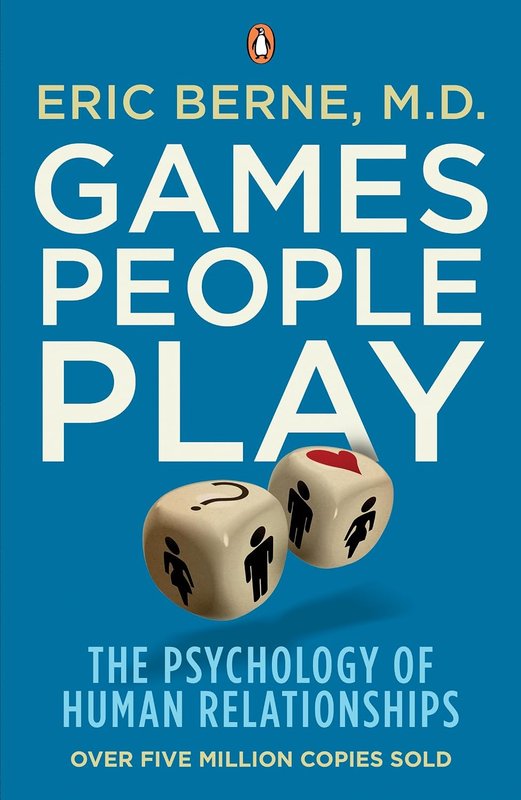
Games People Play
The 1964 classic that turned hidden patterns in everyday conversation into a namable, escapable script.
by Eric Berne · 2025
Share on XBerne's foundational claim is that much of everyday social interaction runs on scripted, often unconscious routines he calls "games" — repeated patterns of exchange that look like ordinary conversation but are really structured to produce a predictable, usually self-defeating payoff for at least one player.
Built on his own model of transactional analysis — interactions between the Parent, Adult, and Child ego states — the book catalogs dozens of these games by name, turning slippery interpersonal patterns into something namable and, in theory, escapable.
The taxonomy can feel dated and the tone occasionally clinical in a very of-its-era way, and not every "game" holds up as a genuinely distinct pattern rather than a restatement of a few others. Still, the core idea — that people often want the game's emotional payoff more than the stated goal of the conversation — has aged better than most 1960s pop psychology.
The most durable part of Berne's framework isn't the specific game names but the underlying claim that people will unconsciously provoke a familiar emotional outcome — however unpleasant — because predictability itself is comforting. Read past the dated case studies and the book is really an early, clinical description of what later behavioral research would call self-sabotage.
Key ideas
- People often engineer the argument they say they want to avoid, because the payoff is more familiar than the alternative.
- Much of everyday social interaction runs on scripted, often unconscious routines that produce a predictable, usually self-defeating payoff.
- Naming a slippery interpersonal pattern turns it into something escapable, at least in theory.
- The taxonomy can feel dated and not every "game" holds up as a distinct pattern, but the core insight about emotional payoffs has aged well.