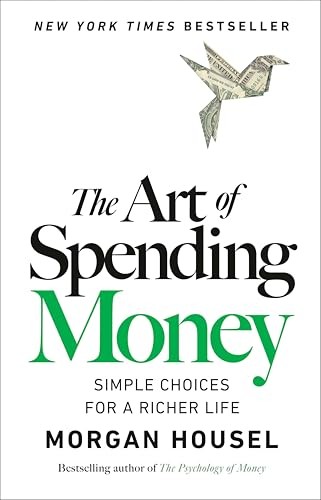
Housel's follow-up to The Psychology of Money shifts focus from earning and saving to a harder, less-discussed question: how to actually spend money well, given that most people's spending habits are shaped by insecurity and social comparison rather than by what would genuinely make them happier.
Structured as short, standalone essays in his usual style, it argues that "a rich life" is a highly individual target most people never actually define, and that a lot of wasteful or joyless spending comes from chasing status markers instead of figuring out what spending actually buys them in wellbeing.
As with his other books, the essay format trades rigor for readability — there's little in the way of a testable framework or hard numbers, and the advice leans heavily on aphorism and anecdote rather than data.
Housel returns repeatedly to the idea that most expensive purchases are really attempts to buy respect or belonging rather than the thing itself, and that this substitution is usually invisible to the person making it. The essays work best when they get concrete about this gap — the difference between what a purchase is supposed to buy (status, ease, identity) and what it actually delivers (a depreciating object).
Key ideas
- Most overspending isn't a math problem — it's buying the wrong thing for what you actually want.
- A "rich life" is a highly individual target most people never actually define, and status-chasing spending rarely closes that gap.
- Most expensive purchases are attempts to buy respect or belonging rather than the thing itself — a substitution that's usually invisible to the buyer.
- The essay format trades rigor for readability, leaning on aphorism and anecdote rather than data or a testable framework.