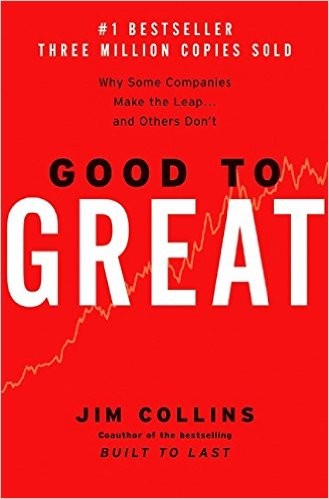
Good to Great
What actually separated good companies from ones that became great.
by Jim Collins · 2001
Share on XCollins and his research team studied companies that sustained a leap from merely good to exceptional long-term performance, comparing them against similar companies that never made the leap, to isolate what actually distinguished the two groups.
The resulting concepts — Level 5 Leadership, the Hedgehog Concept, "first who, then what" — became widely cited shorthand across business writing in the decades since.
Several of the companies held up as exemplars later ran into serious trouble, most notably Fannie Mae, and Circuit City went bankrupt — the book's most common criticism, worth knowing going in; the frameworks may hold up better than any specific company example does.
The Hedgehog Concept is the framework that's aged best of the three — the discipline of only pursuing what you can be the best in the world at, what actually drives your economic engine, and what you're genuinely passionate about, with the insistence that a strategy failing any one of those three tests should be abandoned regardless of how appealing it looks on paper. That's a harder standard than most strategic-planning frameworks apply, which may be part of why so few companies that read the book actually managed to replicate its results.
Key ideas
- Collins studied companies that sustained a leap from merely good to exceptional performance, comparing them against similar companies that never made the leap.
- A strategy that fails even one of three tests — best in the world, drives the economics, genuine passion — should be abandoned, no matter how good it looks on paper.
- Level 5 Leadership, the Hedgehog Concept, and "first who, then what" became widely cited shorthand across business writing in the decades since.
- Several of the exemplar companies later ran into serious trouble — Fannie Mae most notably, and Circuit City went bankrupt — worth knowing going in.
Notable quote: “Good is the enemy of great.” — Jim Collins