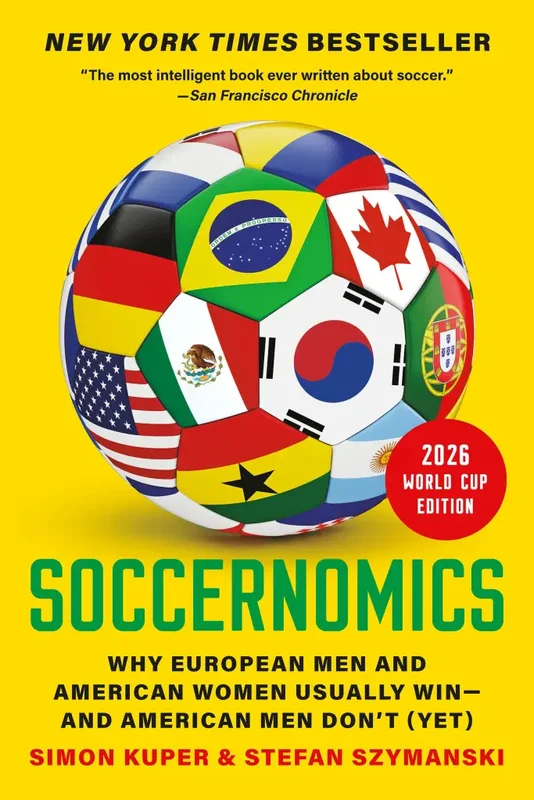
Soccernomics
The economics behind why nations and clubs actually win or lose.
by Simon Kuper, Stefan Szymanski · 2009
Share on XSoccernomics is the book that made “the data disagrees with the pundits” a genre. Simon Kuper and Stefan Szymanski take a Freakonomics-style scalpel to football’s received wisdom — and a lot of it doesn’t survive.
Some of the arguments are now famous enough to feel obvious: that England underperforms relative to its footballing history mostly because of population and wealth math, not passion; that most transfer-market panic-buying is driven by psychology, not value; that penalty shootouts are far more predictable than the “lottery” framing suggests. When the book first landed, these were genuinely contrarian. Now they’re closer to consensus — which is itself a testament to how much the argument won.
What keeps it re-readable is the economics grounding. Szymanski is a sports economist by trade, and the book never feels like stats for stats’ sake — every chapter is really asking “what is this club actually optimizing for, and is it working?” That question turns out to explain a lot about why some clubs overpay for decades and others quietly compound value.
The England chapter is the one that best demonstrates the book's method — Kuper and Szymanski control for population and wealth across dozens of countries and find England's international results land almost exactly where the regression predicts, which reframes decades of 'why can't England win' sports-media hand-wringing as a math problem with a known answer that pundits kept treating as a mystery of national character.
Key ideas
- Soccernomics is the book that made "the data disagrees with the pundits" a genre, taking a Freakonomics-style scalpel to football's received wisdom.
- England's underperformance turned out to be a solved regression problem, not a mystery of national character — the pundits just hadn't done the math.
- Most transfer-market panic-buying is driven by psychology, not value, and penalty shootouts are far more predictable than the "lottery" framing suggests.
- Every chapter is really asking what a club is actually optimizing for, and whether it's working — which explains why some clubs overpay for decades.