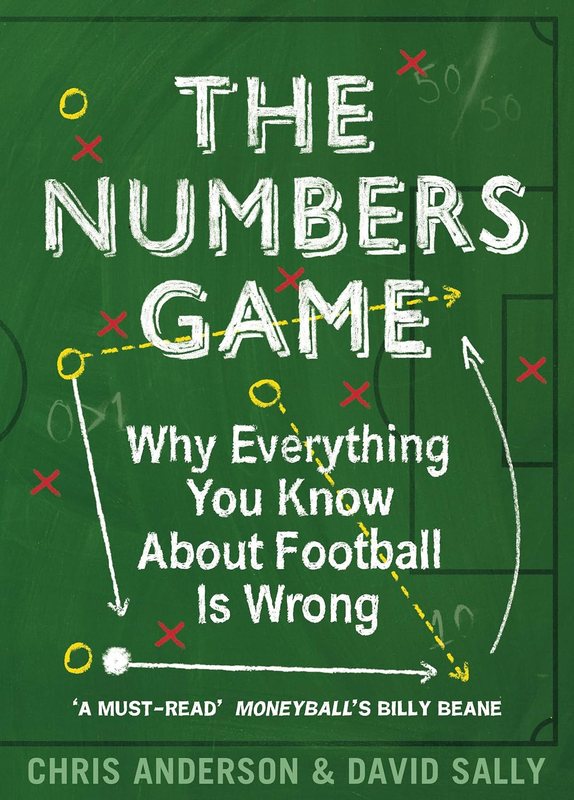
The Numbers Game
Debunking football's most repeated but least evidence-backed myths.
by Chris Anderson, David Sally · 2013
Share on XChris Anderson and David Sally’s The Numbers Game picks specific pieces of football folklore — corners are dangerous, red cards are decisive, star strikers win you the league — and tests them against the actual data. A lot of the folklore loses.
The most memorable finding: football is a low-scoring, highly random sport, which means single-game outcomes are noisier than fans want to admit, and a lot of what looks like “momentum” or “clutch” is closer to variance. That’s an uncomfortable argument for a sport built on narrative, and the authors know it — the book spends real time on why we’re so bad at accepting randomness in a game we watch as pure drama.
It also makes a genuinely useful practical case: since football is low-scoring, avoiding a single bad mistake (a defensive error, a red card) often matters more than manufacturing one moment of brilliance. That’s a different way to watch a match than most broadcasters teach you.
The corner-kick finding is a good example of how the book operates — corners feel dangerous and get treated as a meaningful attacking outcome by commentators and fans alike, but Anderson and Sally's data shows the actual probability of a corner leading to a goal is low enough that a team obsessing over winning more corners is often optimizing for a statistic that barely correlates with scoring.
Key ideas
- Football folklore — corners are dangerous, red cards are decisive, star strikers win you the league — mostly loses when tested against the actual data.
- A lot of football's conventional wisdom survives because it feels true in the moment, not because the data backs it up.
- Football is a low-scoring, highly random sport, and a lot of what looks like "momentum" or "clutch" is closer to variance.
- Since football is low-scoring, avoiding a single bad mistake often matters more than manufacturing one moment of brilliance.