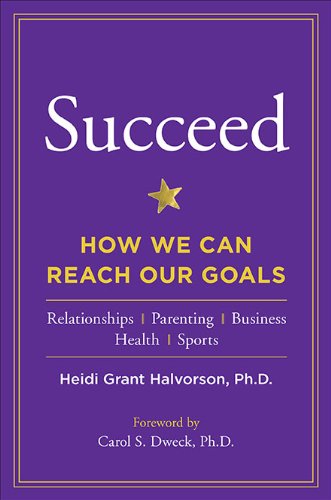
Succeed
The psychology of goal-setting that actually holds up under pressure.
by Heidi Grant Halvorson · 2011
Share on XHeidi Grant Halvorson’s research background is in the psychology of motivation, and Succeed is her case for why some goals stick and others quietly die — not through willpower differences, but through the specific way a goal is framed and structured from the start. “Be-good” goals (proving your competence) behave very differently in the brain than “get-better” goals (improving a skill), and knowing which kind you’re setting changes how resilient it is under pressure.
That’s a more mechanistic, evidence-based approach to goal-setting than most motivational writing offers — less “believe in yourself,” more “here’s specifically why this type of goal is more likely to survive contact with a bad week.”
Halvorson's be-good/get-better distinction has a sharp practical consequence under pressure specifically — a 'be-good' goal (prove you're already competent) makes a setback feel like evidence against your identity, which triggers avoidance, while a 'get-better' goal (improve a specific skill) treats the same setback as expected data, which is why get-better goals survive a bad week that would kill a be-good one.
Key ideas
- Some goals stick and others quietly die not through willpower differences, but through how a goal is framed and structured from the start.
- A goal framed as proving you're already good breaks under setbacks — a goal framed as getting better treats setbacks as expected.
- "Be-good" goals (proving your competence) behave very differently in the brain than "get-better" goals (improving a skill).
- It's a more mechanistic, evidence-based approach to goal-setting than most motivational writing offers.