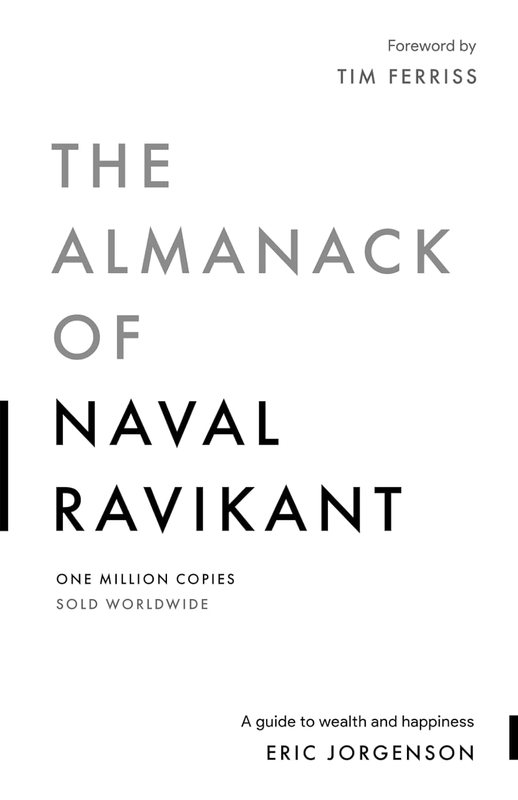
The Almanack of Naval Ravikant
Naval Ravikant's ideas on wealth, happiness, and clear thinking, compiled in one book.
by Eric Jorgenson · 2020
Share on XJorgenson compiles and organizes Naval Ravikant's scattered tweets, podcast appearances, and essays into a single coherent book on building wealth and finding happiness — not as separate goals, but as related outcomes of clear thinking about leverage, specific knowledge, and long-term games.
Structured in two halves — wealth, then happiness — it reads more like a curated anthology of aphorisms and short arguments than a traditionally-authored narrative, since Jorgenson is compiling Ravikant's ideas rather than originating them.
That compiled format is also its main limitation: some ideas are stated with more confidence than evidence behind them, and the aphoristic style occasionally trades precision for quotability — treat individual lines as prompts for your own thinking rather than settled conclusions.
The wealth half leans hardest on the idea of 'specific knowledge' — expertise that can't be taught through a conventional curriculum because it's built from your own particular curiosity and experience, which is what Ravikant argues makes it non-fungible and therefore valuable in a way credentialed knowledge often isn't. The happiness half is the less-discussed part of the book but arguably the more original one, built around treating desire itself as the root of suffering rather than unfulfilled desire specifically.
Key ideas
- Building wealth and finding happiness aren't separate goals — both come from clear thinking about leverage, specific knowledge, and long-term games.
- Wealth built on knowledge no one else has is worth more than wealth built on effort anyone could copy.
- The happiness half treats desire itself as the root of suffering, not just unfulfilled desire specifically.
- It reads more like a curated anthology of aphorisms than a traditionally-authored argument — treat individual lines as prompts, not settled conclusions.
Notable quote: “Seek wealth, not money or status.” — Naval Ravikant