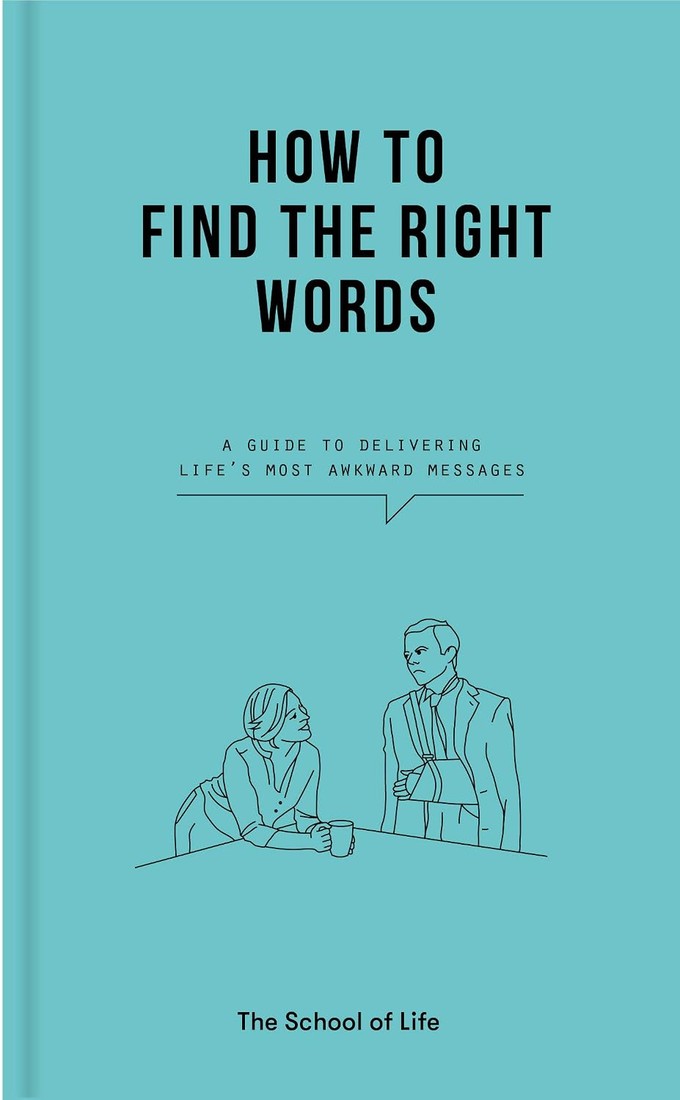
How to Find the Right Words
A guide to delivering life's most awkward messages, kindly and clearly.
by The School of Life · 2021
Share on XThe book's frame is diplomacy, borrowed straight from statecraft: two rival kings might be pounding the table in private, but the emissary sent between them learns to say “my master is slightly disconcerted…” instead. That's the skill this book applies to ordinary life — twenty specific hard messages, grouped into relationships, friendships, work, family and strangers, from turning down a friend's romantic interest to admitting an affair to firing someone — with real phrasing for each, not just advice about tone.
The useful reframe is that diplomacy isn't dishonesty — it's a set of learnable moves that make a hard truth easier to hear without softening it into vagueness. The book names several: reassuring someone of their worth before you correct them, since most people escalate not over the substance of a complaint but over feeling disrespected; admitting your own flaws first, since a complaint lands better from someone who isn't posing as flawless; and picking the moment, since the same message delivered at 7am reads very differently than at 11pm after two drinks. The sharpest claim is against “kindly” ambiguity — leaving someone room for false hope isn't mercy, it's just a slower, crueller version of the same news.
Key ideas
- Diplomacy isn't dishonesty — it's the narrow zone between brutal bluntness and years of swallowed resentment that finally explodes.
- People fight hardest over small points when they feel disrespected, so reassuring someone of their worth often matters more than the specific compromise.
- Admitting your own flaws first (“I do that too”) makes a hard message far easier for someone else to accept.
- Leaving room for false hope isn't kindness — a clean, frank statement spares the other person the slower torture of ambiguity.