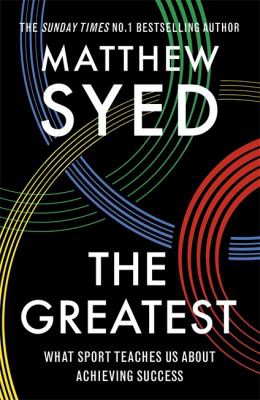
The Greatest
What separates the greatest sporting performances from merely great ones.
by Matthew Syed · 2017
Share on XSyed, a former table tennis champion turned journalist, profiles athletes and moments widely considered the pinnacle of sporting achievement, using them to probe what "greatness" actually means and whether it can be compared across sports and eras.
It's less a single argument than a collection of case studies united by Syed's recurring interest — familiar from his other books — in the mix of talent, circumstance, and deliberate practice behind extraordinary performance.
Readers who've read Syed's Bounce or Black Box Thinking will recognize some of the underlying ideas recycled in new sporting contexts; it works best as a set of compelling individual stories rather than a unified theory.
Syed's most interesting move is resisting a single unifying definition of greatness across the profiles — a chess grandmaster's dominance and a marathoner's endurance record aren't really comparable achievements in any rigorous sense, and the book is more honest for admitting that 'greatest ever' arguments across sports are ultimately more about storytelling than measurement.
Key ideas
- Syed profiles athletes and moments widely considered the pinnacle of sporting achievement to probe what "greatness" actually means across sports and eras.
- The argument over who's the greatest of all time says more about what we value than about any objective ranking.
- A chess grandmaster's dominance and a marathoner's endurance record aren't really comparable achievements in any rigorous sense.
- It's less a single argument than a collection of case studies united by Syed's recurring interest in talent, circumstance, and deliberate practice.