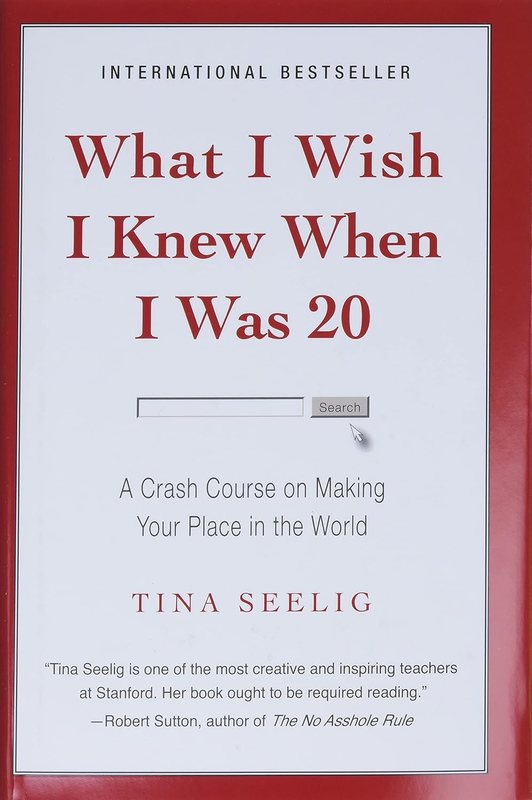
What I Wish I Knew When I Was 20
Practical, unconventional advice for figuring out what to do with your life.
by Tina Seelig · 2009
Share on XStanford lecturer Tina Seelig’s whole book grows out of a single classroom exercise: give students $5 and two hours, and see who can generate the most value. The winning teams didn’t sell lemonade or wash cars — they redefined the problem entirely, which is the real thesis of the book: most constraints are more negotiable than they first appear, and the biggest limiting factor is usually how narrowly you’ve framed the problem, not the resources you actually have.
It’s aimed at a younger reader by title, but the reframing habit — treating a constraint as a creative prompt rather than a wall — holds up well past your twenties, even if some of the specific examples feel more relevant earlier in a career.
The $5 challenge works as a thesis statement because the winning teams' insight wasn't a clever product — it was refusing to accept the assumed constraint at all, treating '$5 and two hours' as an artificially narrow framing of the actual resources available (a captive audience, a brand, attention) rather than a literal budget to work within.
Key ideas
- The whole book grows out of a single classroom exercise: give students $5 and two hours, and see who can generate the most value.
- The biggest constraint on a problem is usually how narrowly you've decided to frame it, not the resources you actually have.
- The winning teams didn't sell lemonade or wash cars — they redefined the problem entirely rather than working within the assumed budget.
- The reframing habit — treating a constraint as a creative prompt rather than a wall — holds up well past your twenties.