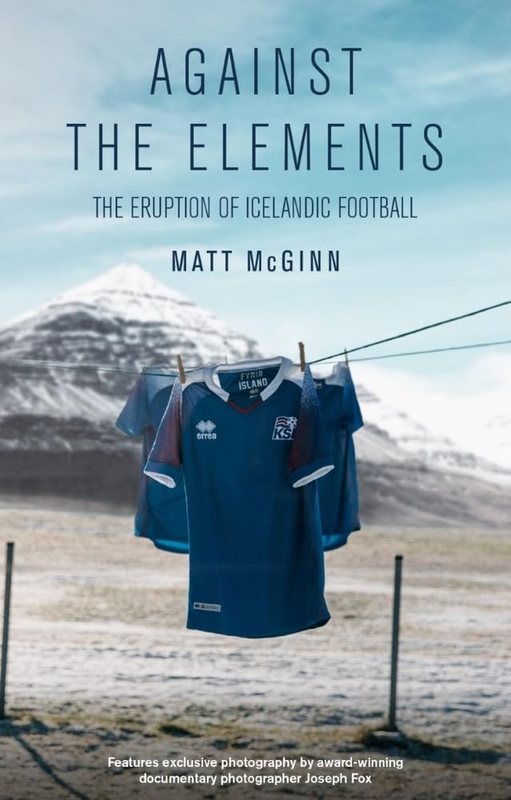
Against the Elements
How Iceland built a footballing culture from almost nothing.
by Matt McGinn · 2020
Share on XIceland has a population smaller than a mid-size American college town, and somehow qualified for Euro 2016 and the 2018 World Cup — McGinn's book is his attempt to explain how, part travelogue and part academic case study.
McGinn is a researcher who studies sport, national identity, and memory, and he treats Iceland's rise less as a fluke and more as a genuine natural experiment in what a tiny footballing nation can build with the right structural choices — coaching development, facilities, culture — when the usual advantages of scale aren't available.
It's a narrower, more specific book than most on this shelf — one country, two tournaments — which makes it a quick read, though also means it's light on the kind of generalizable framework you'd get from a broader analytics text.
McGinn resists the easy 'small nation, big heart' narrative in favor of something more structural — Iceland's football success traces to specific, replicable decisions: a nationwide push to build indoor, heated facilities that let kids train year-round despite the climate, and a coaching-certification program that put more UEFA-qualified coaches per capita in Iceland than almost anywhere else in Europe. The romance of the underdog story is real, but McGinn's case is that it was substantially engineered, not accidental.
Key ideas
- Iceland qualified for Euro 2016 and the 2018 World Cup with a population smaller than a mid-size American college town.
- Iceland's rise wasn't a fluke of national character — it was a specific, fundable set of infrastructure decisions.
- A nationwide push to build indoor, heated facilities let kids train year-round despite the climate.
- Iceland built more UEFA-qualified coaches per capita than almost anywhere else in Europe, a deliberate and replicable choice.