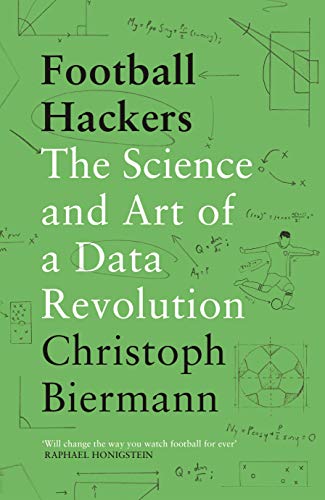
Football Hackers
Meet the outsiders who dragged data analytics into football's inner circle.
by Christoph Biermann · 2019
Share on XMost football-analytics books explain a metric. Christoph Biermann’s Football Hackers explains a movement — the decade when data quietly took over how elite clubs actually coach, scout, and set up their teams, told through the people who pushed it in from the outside.
Biermann, a German football journalist, gets access most stats writers don’t: the early analytics departments at clubs like Liverpool and the coaches willing to admit that a lot of “football wisdom” is just habit dressed up as expertise. The book moves through pressing structures, space control, and the slow, often-resisted process of getting a locker room to trust a spreadsheet over a gut feeling.
The best parts aren’t the numbers — they’re the friction. Coaches who ignored their own analytics departments. Directors who hired a data team and then didn’t listen to a word they said. It’s a much more honest picture of “the data revolution” than the triumphant version usually told, and translated well from the original German.
Biermann is unusually willing to let the skeptics have the last word in a given chapter — a coach who dismisses an analytics department's recommendation and turns out to be right, or a director who hired a data team mostly for PR reasons and never intended to act on their findings. That honesty about failure is what separates this from the genre's more triumphant 'data conquers football' narratives.
Key ideas
- Most football-analytics books explain a metric; this one explains a movement — the decade when data quietly took over how elite clubs coach, scout, and set up teams.
- The data revolution in football wasn't a clean takeover — it was a decade of arguments most clubs are still having.
- A lot of "football wisdom" is just habit dressed up as expertise, and getting a locker room to trust a spreadsheet over a gut feeling took years.
- The best parts aren't the numbers — they're the friction: coaches who ignored their own analytics departments, directors who hired a data team and didn't listen.