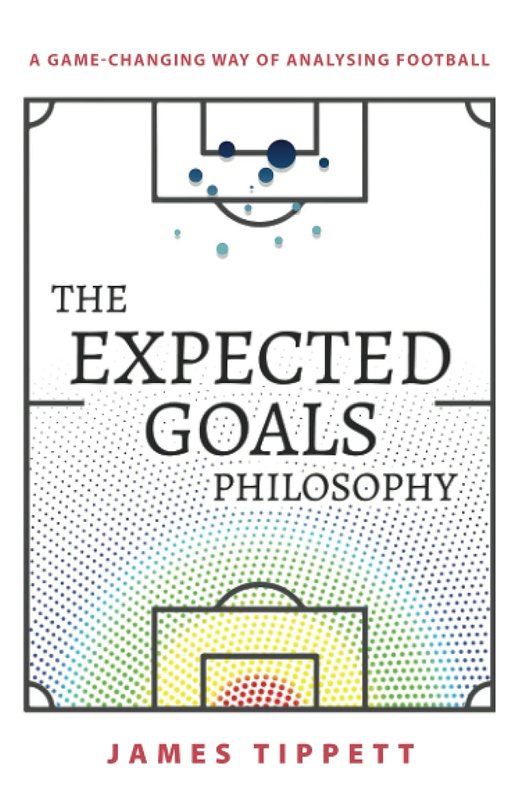
The Expected Goals Philosophy
A deep, practical dive into building and using an xG model.
by James Tippett · 2019
Share on XIf you’ve watched football on television any time in the last five years, you’ve seen the number: xG, sitting quietly in the corner of the screen, telling you a team “deserved” to win even though they lost 2-1. James Tippett’s The Expected Goals Philosophy is the book that got there first — written back when xG was still a stats-Twitter argument, not a broadcast graphic.
The pitch is simple: not all shots are created equal, so counting goals alone tells you less than you think. A tap-in from six yards and a speculative effort from thirty are both “a shot,” but only one of them should really move the needle on how good a team is. Tippett builds the case for expected goals from the ground up — what it measures, what it doesn’t, and why it turned out to be a better predictor of future results than the actual scoreline.
What holds up years later is how carefully it separates the metric from the hype. Tippett isn’t selling xG as a magic number that replaces watching the game — he’s showing where it adds a layer of honesty that raw results hide, and where it still falls short (finishing quality, game state, the ref having a bad day). That kind of intellectual honesty is rarer than it should be in sports-analytics writing.
Tippett's most durable contribution might be the distinction he draws between a shot's quality and a team's finishing — treating them as genuinely separate skills that a single goals-scored number collapses together, which is the conceptual move that makes xG useful for evaluating process rather than just outcome. That separation is also exactly where later critics would push back, arguing some finishers reliably outperform their xG in ways the model doesn't fully capture.
Key ideas
- Not all shots are created equal, so counting goals alone tells you less than you think about how good a team really is.
- Expected goals measures the quality of your chances, not the quality of your finishing — and conflating the two is the most common misuse of the number.
- This is the book that got to xG first, written back when it was still a stats-Twitter argument rather than a broadcast graphic.
- Tippett is careful to show where xG adds honesty and where it still falls short — finishing quality, game state, a referee's bad day.