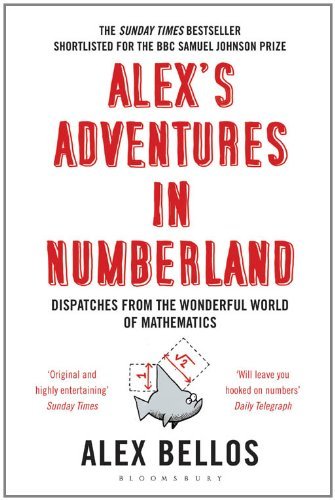
Alex’s Adventures in Numberland
A joyful tour of the math hiding in ordinary things.
by Alex Bellos · 2010
Share on XAlex Bellos’s Adventures in Numberland is popular math done right: a genuinely globe-trotting tour of mathematics, visiting a Japanese abacus school, an Amazonian tribe with no words for numbers past five, and the origins of zero, all in service of showing that math is stranger and more human than the classroom version suggests.
What separates it from a lot of popular-math writing is that Bellos treats the history and the culture as seriously as the math itself — you come away understanding not just what a mathematical idea is, but why some civilization stumbled onto it in the first place, and what that says about how humans think.
It’s genuinely fun in a way math books rarely manage, and it doesn’t require any background — this is an entry point, not a book that assumes you’re already comfortable with the subject.
The chapter on the Amazonian tribe without number words past five does more conceptual work than it first appears — Bellos uses it to make a genuinely disorienting point, that counting itself isn't a universal human default but a specific cultural technology some societies never needed to invent, which reframes math not as a fixed truth humans discovered but as a set of tools different cultures built for different problems.
Key ideas
- Bellos takes a genuinely globe-trotting tour of mathematics — a Japanese abacus school, an Amazonian tribe with no words for numbers past five, the origins of zero.
- Counting past a handful isn't a universal human instinct — it's a tool some cultures built and others simply never needed.
- Bellos treats the history and culture as seriously as the math itself, showing why some civilization stumbled onto an idea in the first place.
- It's genuinely fun in a way math books rarely manage, and doesn't require any background — an entry point, not a book that assumes prior comfort with the subject.